When algorithms reach their limit, experience takes over
The Human Factor, Graham Greene’s 1978 spy novel, dramatizes the gap between systems that optimize measurable outcomes and the deeply contextual reality of human experience. Nearly fifty years later, that gap has never felt more relevant, especially in energy markets.
Artificial intelligence is reshaping the industry: forecasting, data cleansing, real-time dispatch. These systems are powerful, but they share a fundamental constraint: they are trained on the past. Their memory is extensive, yet their imagination is inherently limited. When reality moves beyond the boundaries of known experience, they hesitate, or fail. It is precisely at this edge that the human factor proves indispensable.
Easter Monday, April 6, 2026
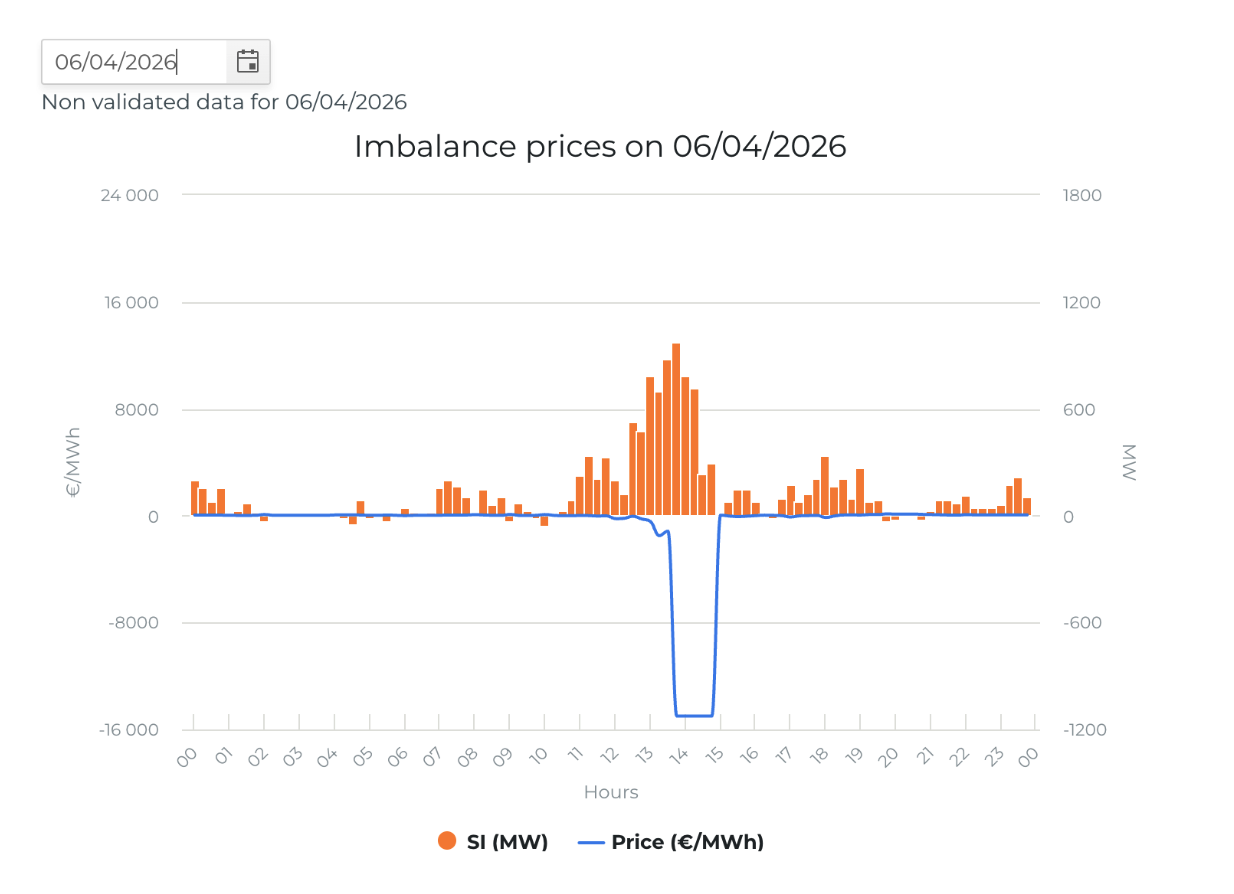
On Easter Monday, April 6, 2026, the Belgian power market witnessed an unprecedented event. Day-ahead prices were already deeply negative due to a spring holiday, abundant sunshine, and subdued demand.
Then, at 13:45, real-time imbalance prices plunged to –15,000 EUR/MWh, remaining locked at this absolute design floor for 75 consecutive minutes.
A true out-of-sample event. One no model had ever been trained on, because it had never occurred before.
Where models stop, humans act
YUSO manages over 400 MW of Battery Energy Storage Systems (BESS) across Belgium, supported by a human flexibility desk operating 24/7, every day of the year.
On that Easter Monday, one of those operators — watching prices collapse in real time — made a decision no algorithm was equipped to make. They shifted the portfolio’s position, freeing up charging capacity to absorb power at the most extreme negative prices ever recorded in Belgium.
This was not the output of a model. It was the result of experience, market intuition, and the willingness to act under uncertainty, capabilities that remain fundamentally human.
In their own words
YUSO
“On Easter Monday, it quickly became clear that this shift would be extraordinary, with prices dropping to new lows by the minute. By around midday, it was evident that the price floor would fall far below the Day-Ahead level the asset had been scheduled on. I decided to free the asset for charging on real-time prices, which ultimately turned out to be a historic (and technical) low.”
— Pierre Mounzer, Flex Portfolio Manager, YUSO
ASPIRAVI
“With our battery project in Brecht (25 MW/ 100 MWh), we have taken our first step into BESS assets. This technology requires active management to create value. What happened on Easter Monday shows that, in extreme market conditions, you need to act quickly. That is where YUSO’s experience makes the difference. We now look forward to further optimizing this together, as we can also start leveraging services such as FCR and aFRR.”
— Bert Deprest, Market & Portfolio Manager, Aspiravi
The Bottom Line
On ordinary days, automation scales. On extraordinary days, experience decides. The human factor is not a romantic notion: on April 6, 2026, it carried a very real price tag.
Graham Greene’s insight, first explored in The Human Factor half a century ago in the corridors of British intelligence, proves just as relevant on today’s Belgian power grid: the most valuable edge is the one no system can replicate.
👉 Interested in how YUSO combines automation and human expertise to maximise BESS portfolio returns?
For more information, contact sales@yuso.com or visit www.yuso.com